VIRTUAL REALITY TRUCK SIMULATOR

Virtual Reality Truck Simulators
Virtual reality truck simulators represent one of the most immersive applications of modern simulation technology, placing users directly inside a fully interactive heavy goods vehicle (HGV) environment. Instead of observing the road from a fixed monitor setup, VR allows drivers to experience the sensation of sitting inside a real truck cab, complete with full spatial awareness, realistic scale, and intuitive head tracking.Within the TruckVR division of Forcetronic, virtual reality trucking simulation is designed to replicate the complexity, scale, and realism of long-haul driving. By combining VR headsets with advanced simulation software and optional motion platforms, users can experience driving conditions that closely mirror real-world HGV operation.
Immersive Cab-Based Driving Experience
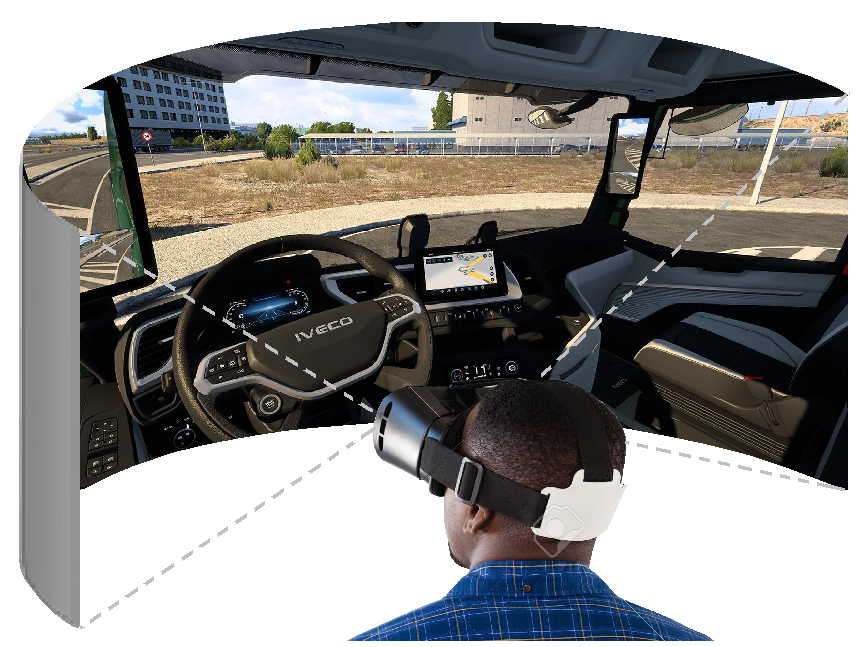
The defining feature of VR truck simulators is the ability to step “inside” the vehicle rather than viewing it from outside the screen. The entire cab environment is rendered in three dimensions, including the dashboard, steering wheel, mirrors, and surrounding interior structure.This creates a highly immersive experience where drivers naturally develop real-world habits such as checking mirrors, scanning junctions, and maintaining lane discipline. Unlike traditional simulator setups, VR removes the visual barrier of a monitor, allowing the driver to feel fully integrated into the cab environment.For training, education, and simulation purposes, this level of immersion significantly improves realism and engagement.
Realistic 3D Depth Perception for HGV Driving
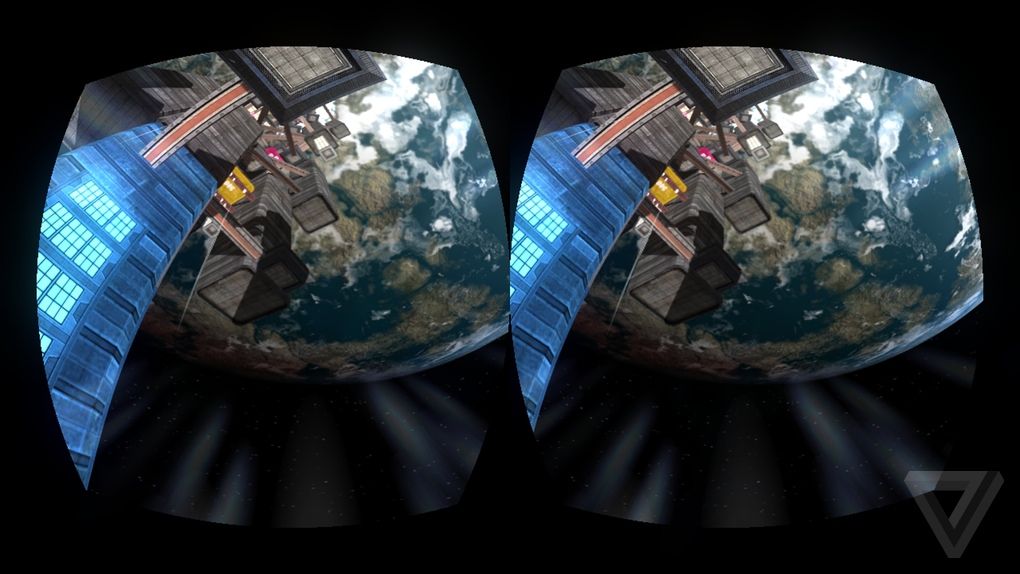
Virtual reality headsets generate stereoscopic vision by presenting slightly different images to each eye. The brain combines these images to produce true depth perception, which is essential for large vehicle operation.In truck simulation, this allows users to accurately judge:
- Distance to other vehicles in traffic
- Width of tight roads and industrial areas
- Turning radius and trailer swing
- Positioning during lane changes and overtaking
- Proximity to loading bays and docking areas
This enhanced spatial awareness is particularly valuable for learning safe driving techniques in large vehicles, where misjudging distance can have significant consequences in real-world conditions.
360° Head Tracking and Situational Awareness
One of the most important advantages of VR truck simulators is full 360-degree head tracking. The virtual world responds instantly to natural head movement, enabling drivers to look around the cab just as they would in a real truck.This allows for:
- Checking side and rear-view mirrors naturally
- Monitoring blind spots during lane changes
- Scanning intersections before turning
- Observing surrounding traffic behaviour
- Maintaining awareness during complex manoeuvres
Unlike static screen setups, VR encourages natural head movement, improving both realism and driving discipline. This is especially beneficial for learners who need to develop safe scanning habits.
Advanced Spatial Audio for Realistic Road Feedback
Audio plays a crucial role in VR truck simulators. Spatial audio technology ensures that all sounds originate from accurate positions within the environment, enhancing realism and reaction time.Key sound elements include:
- Engine and drivetrain noise from the cab
- Tyre friction and road surface feedback
- Surrounding traffic movement and overtaking vehicles
- Indicator clicks and dashboard alerts
- Environmental effects such as wind and weather
When a vehicle approaches from behind or the side, the sound shifts directionally in real time. This helps drivers develop better awareness of surrounding traffic without relying solely on visual cues.
Motion Simulation and Physical Feedback Integration
While VR alone provides a strong sense of immersion, combining it with motion simulator platforms takes realism to a higher level. Motion systems replicate physical forces such as acceleration, braking, suspension movement, and road surface changes.When VR visuals are synchronised with motion feedback, the driver experiences a unified sensory environment where sight, sound, and physical movement align. This reduces motion mismatch and significantly increases immersion.Common simulation effects include:
- Vehicle pitch during braking and acceleration
- Cab vibration over uneven terrain
- Weight transfer during cornering
- Trailer movement and articulation response
This combination is widely used in professional training environments and advanced simulation systems.
VR Truck Simulation for Training and Skill Development
Beyond entertainment, VR truck simulators are increasingly used for training and research purposes. They provide a safe, controlled environment where drivers can practice complex scenarios without real-world risk or cost.Typical training applications include:
- Learning basic HGV controls and cab layout
- Practising motorway and urban driving
- Improving hazard perception and reaction time
- Simulating adverse weather conditions
- Developing reversing and docking skills
Because scenarios can be repeated and adjusted, VR simulation offers a highly efficient method for skill development compared to traditional on-road training alone.
Choosing the Right VR Truck Simulator Setup
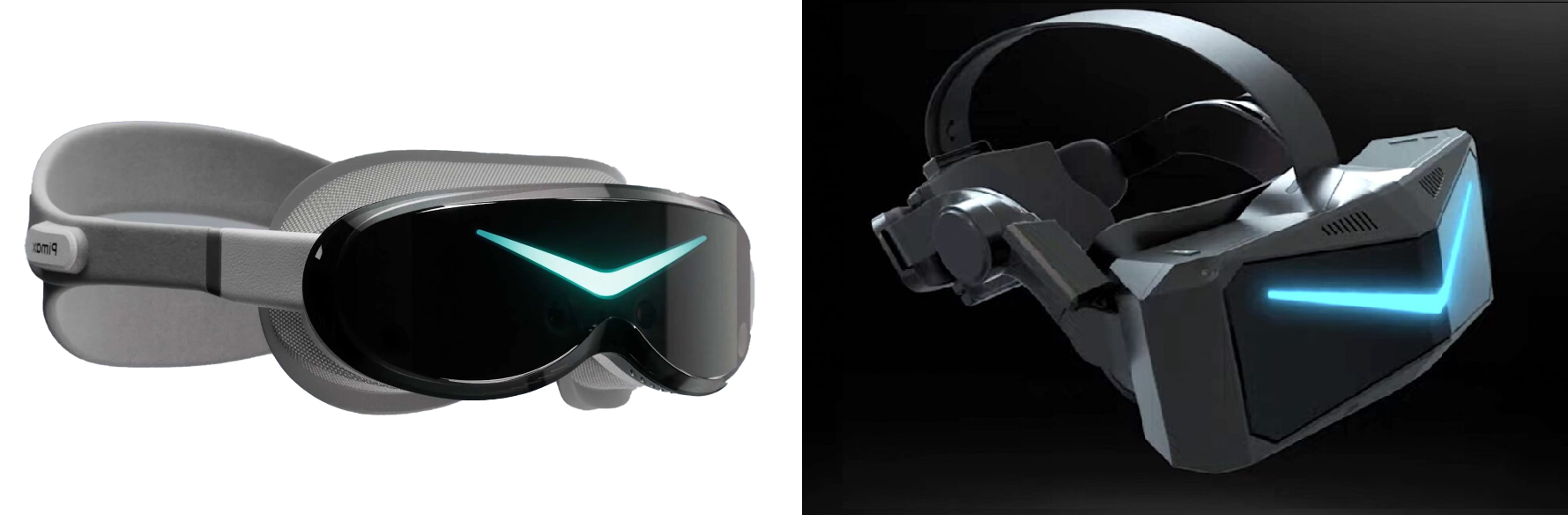
VR truck simulation systems vary in complexity depending on user needs. Entry-level setups may rely on VR headsets and standard steering peripherals, while advanced configurations incorporate full cockpit rigs, motion platforms, and multi-display monitoring systems.Important considerations include:
- Comfort for long driving sessions
- Field of view and headset resolution
- Compatibility with simulation software
- Level of force feedback and motion integration
- Realism of steering and pedal input systems
The TruckVR platform is designed to support a wide range of configurations, allowing users to scale their experience from casual simulation to professional-grade training environments.
The Future of Virtual Reality Truck Simulation
As VR technology continues to evolve, truck simulators are becoming more realistic, accessible, and widely adopted. Improvements in headset resolution, tracking precision, and rendering performance are pushing simulation fidelity closer to real-world driving conditions. Across the broader ForceTronic ecosystem—including RaceVR, BikeVR, flightVR, and TruckVR—virtual reality is playing an increasingly important role in vehicle simulation across multiple transport categories.Future developments are expected to include:
- Higher-fidelity cab environments
- More advanced physics and traffic AI
- Improved multi-user training scenarios
- Greater integration with motion and telemetry systems
Summary
Virtual reality truck simulators offer an advanced, immersive way to experience heavy goods vehicle driving in a safe and controlled environment. With realistic 3D depth perception, full 360° head tracking, spatial audio, and optional motion integration, VR creates a highly convincing simulation of real-world trucking conditions.Within the TruckVR platform at Forcetronic, these technologies combine to deliver a powerful simulation experience suitable for training, education, and immersive entertainment, helping users understand and master the complexity of modern HGV driving.